Posted by: softypapa | March 27, 2008

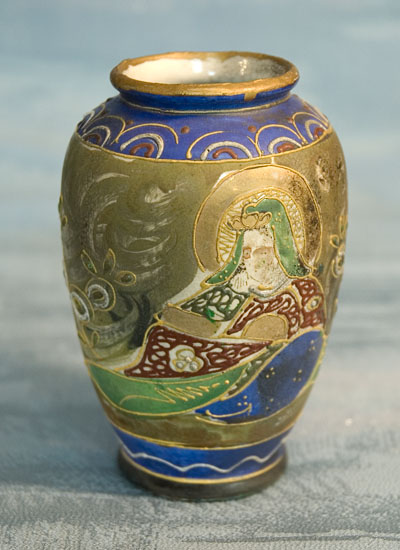
Small Antique Japan Porcelain Vase - Hand-painted Kabin

Vase Kabin Japan Japanese Nippon Nihon Tokaido Softypapa

Vase Kabin Japan Japanese Nippon Nihon Tokaido Softypapa

Vase Kabin Japan Japanese Nippon Nihon Tokaido Softypapa

Vase Kabin Japan Japanese Nippon Nihon Tokaido Softypapa

Vase Kabin Japan Japanese Nippon Nihon Tokaido Softypapa

Vase Kabin Japan Japanese Nippon Nihon Tokaido Softypapa

Vase Kabin Japan Japanese Nippon Nihon Tokaido Softypapa

Vase Kabin Japan Japanese Nippon Nihon Tokaido Softypapa 

Description

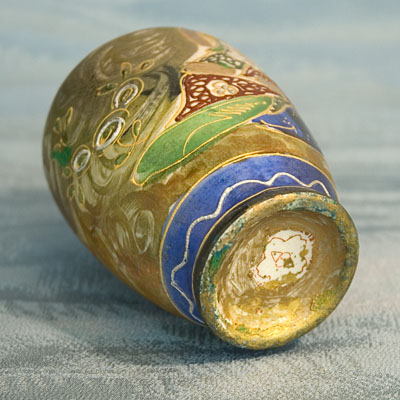
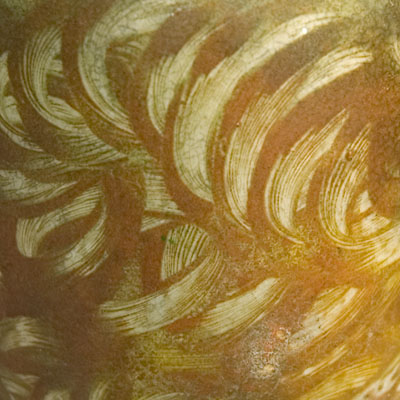
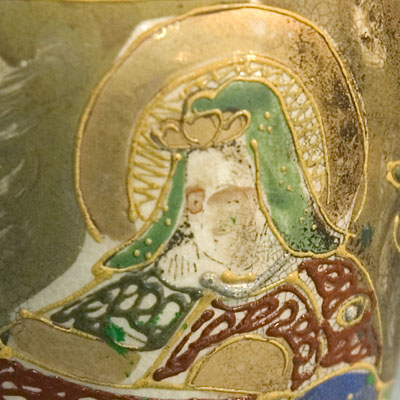
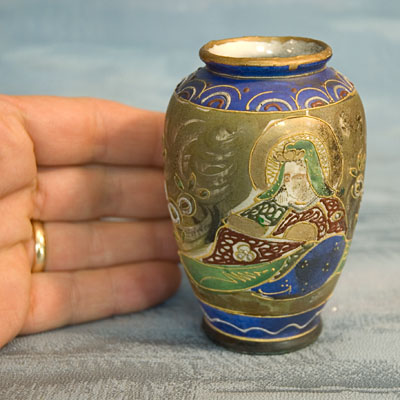
Splendid Japanese porcelain flower vase (kabin) with highly detailed hand-painted finish.  This vase is less than 40 years old and is in good condition with no chips or visible cracks and only small marks and scratches from handling.

Size:
Height: 3.7 inches (9.5 centimeters)
Weight: 2.9 ounces (83 grams)

Click here to see more fine-quality Japanese ceramics!
Click
here to see additional treasures from Japan!

item code: R1S4-0004619
ship code: L1650

Tags: , , , , , , ,

Posted by: softypapa | March 27, 2008

Old Japan Daikoku Statue Shichifukujin Luck God Okimono

Daikoku God Luck Treasure Sack Shinto Religion Shichifukujin Japan Japanese Nippon Nihon Tokaido Softypapa

Daikoku God Luck Treasure Sack Shinto Religion Shichifukujin Japan Japanese Nippon Nihon Tokaido Softypapa

Daikoku God Luck Treasure Sack Shinto Religion Shichifukujin Japan Japanese Nippon Nihon Tokaido Softypapa

Daikoku God Luck Treasure Sack Shinto Religion Shichifukujin Japan Japanese Nippon Nihon Tokaido Softypapa

Daikoku God Luck Treasure Sack Shinto Religion Shichifukujin Japan Japanese Nippon Nihon Tokaido Softypapa

Daikoku God Luck Treasure Sack Shinto Religion Shichifukujin Japan Japanese Nippon Nihon Tokaido Softypapa

Daikoku God Luck Treasure Sack Shinto Religion Shichifukujin Japan Japanese Nippon Nihon Tokaido Softypapa

Daikoku God Luck Treasure Sack Shinto Religion Shichifukujin Japan Japanese Nippon Nihon Tokaido Softypapa

Daikoku God Luck Treasure Sack Shinto Religion Shichifukujin Japan Japanese Nippon Nihon Tokaido Softypapa

Daikoku God Luck Treasure Sack Shinto Religion Shichifukujin Japan Japanese Nippon Nihon Tokaido Softypapa

Daikoku God Luck Treasure Sack Shinto Religion Shichifukujin Japan Japanese Nippon Nihon Tokaido Softypapa

Daikoku God Luck Treasure Sack Shinto Religion Shichifukujin Japan Japanese Nippon Nihon Tokaido Softypapa

Daikoku God Luck Treasure Sack Shinto Religion Shichifukujin Japan Japanese Nippon Nihon Tokaido Softypapa 

Description

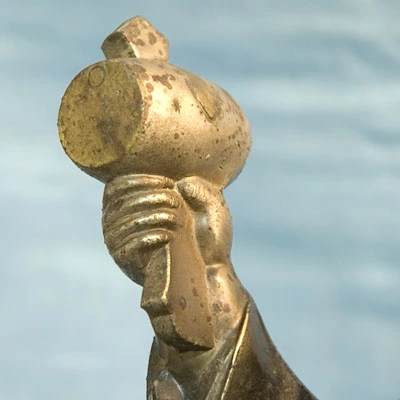
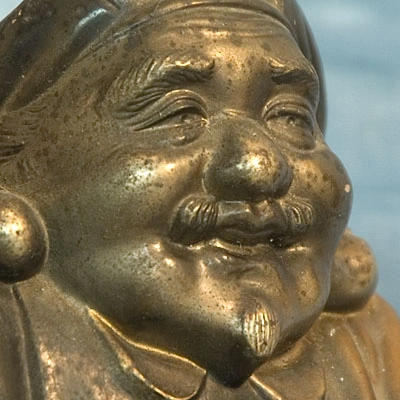
Antique brass image of Daikoku, Japan’s god of wealth and good fortune.  Daikoku is one of the most famous and celebrated gods within the Japanese Shinto (native religion of Japan) pantheon (please read below to learn more about Shinto).  Daikoku is one of seven popular luck gods collectively known as Shichifukujin.  These famous gods (six male and one female) are frequently seen together in Japanese art, often on a boat sailing the seas of fortune.  Daikoku is usually depicted holding his wonderful luck hammer which he waves to dispense good fortune upon worthy humans.  The god is also frequently shown standing upon two large bales of rice, an auspicious symbol of prosperity.  The happy luck god wears one of the most captivating smiles in all Asian art and is nearly always depicted in the act of joyfully visiting wealth and happiness upon the earth (note the bag of goodies carried over his left shoulder).

About the Listed Item

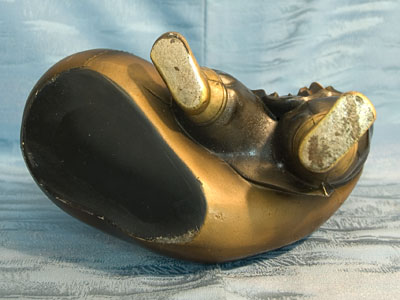
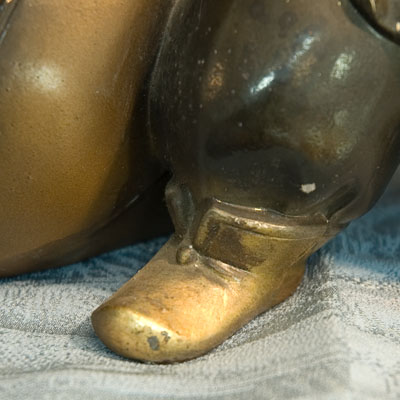
The large, old brass Daikoku display statue (okimono) offered here is in poor to fair condition with marks and scratches from handling.  This wonderful old statue dates from the early to mid 20th century and wears a darkened patina of age which we believe enhances the figure’s character and appeal.  The Daikoku figure and treasure sack are made of brass while the small child and Daikoku’s hammer are made of a silver-colored metal which we cannot identify.

Size:
Height (from base to top of Daikoku’s hammer): 9.0 inches (23.0 centimeters)
Width (across base): 9.0 inches (23.0 centimeters)
Depth (across base): 5.9 inches (15.0 centimeters)
Weight: 7.0 pounds (3.18 kilograms)

Important Note:
Please be sure to note the shipping cost for this sake large and heavy brass statue.  Shipment is via international Express Mail Service (EMS) which included a tracking number and insurance.

Click here to see other Daikoku items!
Click
here to see more Shinto items!
Click
here to see additional treasures from Japan!

More about the Shinto religion

Shinto is one of the two major religions of Japan (the other is Buddhism).  Shinto is often considered to be the native religion of Japan, and is as old as Japan itself.  The name Shinto means “the way of the gods.”  Shinto is a pantheistic religion, in which many thousands of major and minor gods are thought to exist.  The Japanese have built thousands of shrines (jinja) throughout the country to honor and worship these gods.  Some shrines are huge and are devoted to important deities.  Other shrines are small and may be easily missed when strolling along roads in the countryside.

Shinto gods are called kamiKami are thought to have influence on human affairs, and for this reason many Japanese make regular pilgrimage to community shrines in order to offer prayers to local kami.  The act of prayer involves approaching the shrine structure, passing through the gate-like torii, cleansing the hands and mouth with water and possibly ascending stairs to the main entrance of the shrine.  Usually without entering the shrine the worshipper will throw some coins into a stone or wooden collection box and then rattle the suzu bell which is at the top of a long hemp rope.  The worshiper grabs hold of the rope and shakes it back and forth causing the copper bell at the top to rattle.  This is thought to get the attention of the shrine god.  The worshipper then bows twice, claps his or her hands twice and then bows again.  In addition, the worshipper may clasp their hands together in silent prayer.  Shintoism and Buddhism have managed to find a comfortable coexistence in Japan.  Evidence of this harmonious relationship is found in the fact that that most Japanese are married in a Shinto shrine, but buried by a Buddhist priest.

item code: R1S6-0004618
ship code: B or appropriate

Tags: , , , , , , , , , , , , ,

Posted by: softypapa | March 27, 2008

Antique Japanese Sake Keg - Wooden Masame Suginoki Taru

Sake Flask Tokkuri Japan Japanese Nippon Nihon Tokaido Softypapa

Sake Flask Tokkuri Japan Japanese Nippon Nihon Tokaido Softypapa

Sake Flask Tokkuri Japan Japanese Nippon Nihon Tokaido Softypapa

Sake Flask Tokkuri Japan Japanese Nippon Nihon Tokaido Softypapa

Sake Flask Tokkuri Japan Japanese Nippon Nihon Tokaido Softypapa

Sake Flask Tokkuri Japan Japanese Nippon Nihon Tokaido Softypapa

Sake Flask Tokkuri Japan Japanese Nippon Nihon Tokaido Softypapa

Sake Flask Tokkuri Japan Japanese Nippon Nihon Tokaido Softypapa

Sake Flask Tokkuri Japan Japanese Nippon Nihon Tokaido Softypapa 

Description

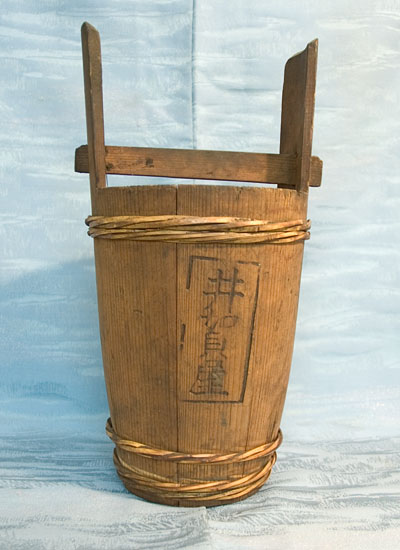
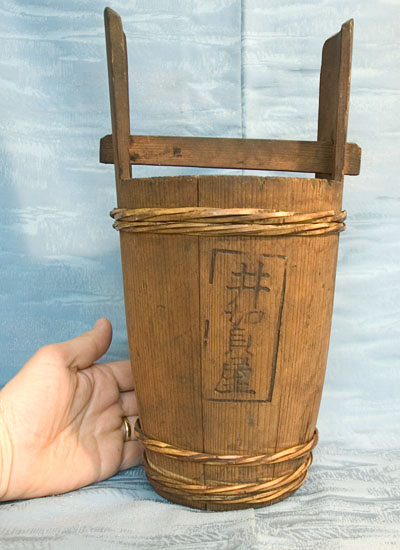
Antique wooden Japanese sake keg (taru).  Old kegs such as this were once used in Japan to store fluids such as soy sauce and sake.  The kegs commonly include a handle and spout and were typically made of wood from the Japanese suginoki tree which is known as Japanese Cedar (Cryptomeria) in the west.  Suginoki is native only to Japan and has long been a favored wood for the making of high-quality cabinetry and woodcraft.  Taru flasks were assembled without the use of adhesive and were made watertight through tight-fitting joints bound with copper bands or interwoven strips of bamboo.  The wooden slats which form the body of the keg may display longitudinal or cross-cut grain patterns (called masame and itame respectively) though the itame style is most common.  Taru are typically finished with a light layer of wax or persimmon juice.

About the Listed Item

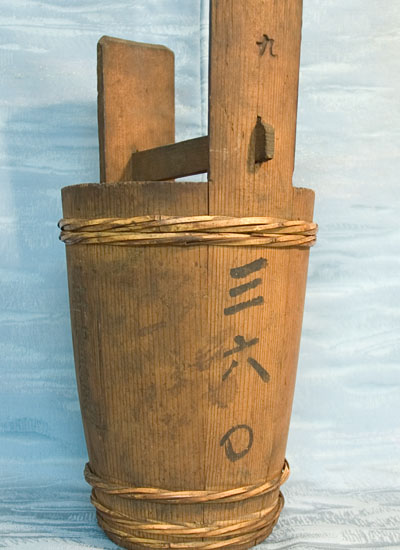
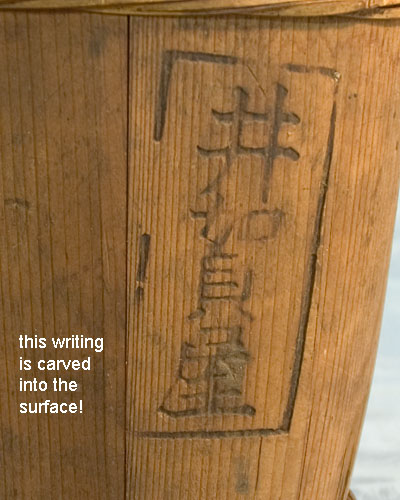
The old taru sake keg offered here, though of fine quality, has nevertheless seen its share of use and today is in poor condition and suitable only as a display piece.  The keg is made of Japanese cedar cut in the less commonly seen (in sake kegs at least) masame style, which shows off the wood’s tight, straight grain pattern.  The keg is held together with woven strips of dried bamboo which are a bit loose and can come loose so careful handling is necessary.  Japanese writing is carved into the side and bottom of the keg.  This item dates from the late 19th or early 20th century and was acquired in this historic city of Shizuoka, Japan very near the foot of Mt. Fuji.

Size:
Height (from base to top of handle): 12.1 inches (31.0 centimeters)
Diameter (across top of keg): 6.0 inches (15.5 centimeters)
Weight: 11.0 ounces (313 grams)

Important Note:
Please be sure to note the shipping cost for this sake large wooden flask.  Shipment is via international Express Mail Service (EMS) which included a tracking number and insurance.

Click here to see additional sake items!
Click
here to see more treasures from Japan!

More about Japanese sake and sake utensils

Sake has long been an important part of Japanese culture.  In the past, sake was considered a very special item, reserved for only the most important occasions, such as weddings, birth celebrations and other auspicious events.  Sake was considered a sacred drink, and accordingly the first glass poured was always offered to the gods before the remainder could be shared among the celebrants.  Sake can be served either warm or cold and special sake flasks are used to both prepare and dispense this unique Japanese drink.  Sake is warmed either by immersing the flask (already filled with sake of course) into warm water until the desired temperature is reached or through the use of a special sake kettle called a choshi.  The latter method however, though common in old Japan, is today usually reserved for ceremonial events only.  Over time, sake utensils, such as cups have developed their own ritual significance which is still evident in modern Japan.  For example, it is today common at Japanese engagement parties for the man and woman to exchange sake cups as a sign of their mutual intent to marry.  Very beautiful sake cups are also given away to celebrate the birth of a child, as these cherished items are considered symbolic of the significance of the new parent-child relationship.  Though normally small in size, sake cups and flasks have long been used in Japan as a medium for the expression of art and calligraphy.  Hand-painted cups and flasks are highly collectable both within and outside Japan and are eagerly sought after by collectors who value their utilitarian nature and artistic splendor.

item code: R2S7-0004617
ship code: B or appropriate

Tags: , , , , , , , , ,

Posted by: softypapa | March 26, 2008

Japanese Ceremonial Sake Cup Gold Plated Metal Sakazuki

Sakazuki Sake Cup Guinomi Japan Japanese Nippon Nihon Tokaido Softypapa

Sakazuki Sake Cup Guinomi Japan Japanese Nippon Nihon Tokaido Softypapa

Sakazuki Sake Cup Guinomi Japan Japanese Nippon Nihon Tokaido Softypapa

Sakazuki Sake Cup Guinomi Japan Japanese Nippon Nihon Tokaido Softypapa

Sakazuki Sake Cup Guinomi Japan Japanese Nippon Nihon Tokaido Softypapa

Sakazuki Sake Cup Guinomi Japan Japanese Nippon Nihon Tokaido Softypapa 

Description

Vintage Japanese ceremonial sake cup.  Such cups are called sakazuki in Japan where they are used to commemorate important events such as birthdays, anniversaries and other significant milestones.  This splendid vintage sakazuki ceremonial sake cup is made of metal plated with 24 carat gold.  The cup is in good condition with only small marks and scratches from handling and possible past use and dates from the mid to late Japanese Showa period (1926-1989).  The cup was acquired in the historic city of Shizuoka, Japan near the foot of Mt. Fuji.  Click here to see more sake cups!

Size of cup:
Height: 1.1 inches (2.8 centimeters)
Diameter: 3.6 inches (9.2 centimeters)
Weight: 4.0 ounces (115 grams)

Click here to see other sakazuki!
Click
here to see additional sake items!
Click
here to see more treasures from Japan!

More about Japanese sake and sake utensils

Sake has long been an important part of Japanese culture.  In the past, sake was considered a very special item, reserved for only the most important occasions, such as weddings, birth celebrations and other auspicious events.  Sake was considered a sacred drink, and accordingly the first glass poured was always offered to the gods before the remainder could be shared among the celebrants.  Sake can be served either warm or cold and special sake flasks are used to both prepare and dispense this unique Japanese drink.  Sake is warmed either by immersing the flask (already filled with sake of course) into warm water until the desired temperature is reached or through the use of a special sake kettle called a choshi.  The latter method however, though common in old Japan, is today usually reserved for ceremonial events only.  Over time, sake utensils, such as cups have developed their own ritual significance which is still evident in modern Japan.  For example, it is today common at Japanese engagement parties for the man and woman to exchange sake cups as a sign of their mutual intent to marry.  Very beautiful sake cups are also given away to celebrate the birth of a child, as these cherished items are considered symbolic of the significance of the new parent-child relationship.  Though normally small in size, sake cups and flasks have long been used in Japan as a medium for the expression of art and calligraphy.  Hand-painted cups and flasks are highly collectable both within and outside Japan and are eagerly sought after by collectors who value their utilitarian nature and artistic splendor.

item code: R4S2B2-0004615
category code:  SAKECUP
ship code: L1650

Tags: , , , , , , , , ,

Posted by: softypapa | March 26, 2008

Japanese Ceremonial Sake Cup - Wood & Lacquer Sakazuki

Sakazuki Sake Cup Guinomi Japan Japanese Nippon Nihon Tokaido Softypapa

Sakazuki Sake Cup Guinomi Japan Japanese Nippon Nihon Tokaido Softypapa

Sakazuki Sake Cup Guinomi Japan Japanese Nippon Nihon Tokaido Softypapa

Sakazuki Sake Cup Guinomi Japan Japanese Nippon Nihon Tokaido Softypapa

Sakazuki Sake Cup Guinomi Japan Japanese Nippon Nihon Tokaido Softypapa

Sakazuki Sake Cup Guinomi Japan Japanese Nippon Nihon Tokaido Softypapa

Sakazuki Sake Cup Guinomi Japan Japanese Nippon Nihon Tokaido Softypapa

Sakazuki Sake Cup Guinomi Japan Japanese Nippon Nihon Tokaido Softypapa 

Description

Vintage Japanese ceremonial sake cup.  Such cups are called sakazuki in Japan where they are used to commemorate important events such as birthdays, anniversaries and other significant milestones.  The cups are normally of exceptionally high quality and made of wood with lacquer coatings in red, black and gold though other materials may also be used.  Decoration often consists simply of stylized calligraphy identifying the event the cup was made for along with a few uplifting expressions such as kotobuki (good luck!) and shuku (congratulations!).  Sakazuki sake cups may also include their own storage box with braided binding cord.

About the Listed Item

This splendid vintage sakazuki ceremonial sake cup is made of wood with decorated red lacquer coating on the body.  The cup is in good condition with only small marks and scratches from handling and possible past use and dates from the mid to late Japanese Showa period (1926-1989).  The cup was acquired in the historic city of Shizuoka, Japan near the foot of Mt. Fuji.  Click here to see more sake cups!

Size of cup:
Height: 0.8 inches (2.0 centimeters)
Diameter: 3.9 inches (10.0 centimeters)
Weight: 0.5 ounces (15 grams)

Click here to see other sakazuki!
Click
here to see additional sake items!
Click
here to see more treasures from Japan!

More about Japanese sake and sake utensils

Sake has long been an important part of Japanese culture.  In the past, sake was considered a very special item, reserved for only the most important occasions, such as weddings, birth celebrations and other auspicious events.  Sake was considered a sacred drink, and accordingly the first glass poured was always offered to the gods before the remainder could be shared among the celebrants.  Sake can be served either warm or cold and special sake flasks are used to both prepare and dispense this unique Japanese drink.  Sake is warmed either by immersing the flask (already filled with sake of course) into warm water until the desired temperature is reached or through the use of a special sake kettle called a choshi.  The latter method however, though common in old Japan, is today usually reserved for ceremonial events only.  Over time, sake utensils, such as cups have developed their own ritual significance which is still evident in modern Japan.  For example, it is today common at Japanese engagement parties for the man and woman to exchange sake cups as a sign of their mutual intent to marry.  Very beautiful sake cups are also given away to celebrate the birth of a child, as these cherished items are considered symbolic of the significance of the new parent-child relationship.  Though normally small in size, sake cups and flasks have long been used in Japan as a medium for the expression of art and calligraphy.  Hand-painted cups and flasks are highly collectable both within and outside Japan and are eagerly sought after by collectors who value their utilitarian nature and artistic splendor.

item code: R4S2B2-0004612
category code:  SAKECUP
ship code: L1650

Tags: , , , , , , , , ,

Posted by: softypapa | March 26, 2008

Japanese Ceremonial Sake Cup - Wood & Lacquer Sakazuki

Sakazuki Sake Cup Guinomi Japan Japanese Nippon Nihon Tokaido Softypapa

Sakazuki Sake Cup Guinomi Japan Japanese Nippon Nihon Tokaido Softypapa

Sakazuki Sake Cup Guinomi Japan Japanese Nippon Nihon Tokaido Softypapa

Sakazuki Sake Cup Guinomi Japan Japanese Nippon Nihon Tokaido Softypapa

Sakazuki Sake Cup Guinomi Japan Japanese Nippon Nihon Tokaido Softypapa

Sakazuki Sake Cup Guinomi Japan Japanese Nippon Nihon Tokaido Softypapa

Sakazuki Sake Cup Guinomi Japan Japanese Nippon Nihon Tokaido Softypapa

Sakazuki Sake Cup Guinomi Japan Japanese Nippon Nihon Tokaido Softypapa

Sakazuki Sake Cup Guinomi Japan Japanese Nippon Nihon Tokaido Softypapa 

Description

Vintage Japanese ceremonial sake cup.  Such cups are called sakazuki in Japan where they are used to commemorate important events such as birthdays, anniversaries and other significant milestones.  The cups are normally of exceptionally high quality and made of wood with lacquer coatings in red, black and gold though other materials may also be used.  Decoration often consists simply of stylized calligraphy identifying the event the cup was made for along with a few uplifting expressions such as kotobuki (good luck!) and shuku (congratulations!).  Sakazuki sake cups may also include their own storage box with braided binding cord.

About the Listed Item

This splendid vintage sakazuki ceremonial sake cup is made of wood with red lacquer coating on the body and decorated with Japanese writing.  The cup is in good condition with only small marks and scratches from handling and possible past use and dates from the mid to late Japanese Showa period (1926-1989).  The cup was acquired in the historic city of Shizuoka, Japan near the foot of Mt. Fuji.  Click here to see more sake cups!

Size of cup:
Height: 1.3 inches (3.4 centimeters)
Diameter: 4.2 inches (10.8 centimeters)
Weight: 0.9 ounces (26 grams)

Click here to see other sakazuki!
Click
here to see additional sake items!
Click
here to see more treasures from Japan!

More about Japanese sake and sake utensils

Sake has long been an important part of Japanese culture.  In the past, sake was considered a very special item, reserved for only the most important occasions, such as weddings, birth celebrations and other auspicious events.  Sake was considered a sacred drink, and accordingly the first glass poured was always offered to the gods before the remainder could be shared among the celebrants.  Sake can be served either warm or cold and special sake flasks are used to both prepare and dispense this unique Japanese drink.  Sake is warmed either by immersing the flask (already filled with sake of course) into warm water until the desired temperature is reached or through the use of a special sake kettle called a choshi.  The latter method however, though common in old Japan, is today usually reserved for ceremonial events only.  Over time, sake utensils, such as cups have developed their own ritual significance which is still evident in modern Japan.  For example, it is today common at Japanese engagement parties for the man and woman to exchange sake cups as a sign of their mutual intent to marry.  Very beautiful sake cups are also given away to celebrate the birth of a child, as these cherished items are considered symbolic of the significance of the new parent-child relationship.  Though normally small in size, sake cups and flasks have long been used in Japan as a medium for the expression of art and calligraphy.  Hand-painted cups and flasks are highly collectable both within and outside Japan and are eagerly sought after by collectors who value their utilitarian nature and artistic splendor.

item code: R4S2B2-0004611
category code:  SAKECUP
ship code: L1650

Tags: , , , , , , , , ,

Posted by: softypapa | March 26, 2008

Japanese Ceremonial Sake Cup - Wood & Lacquer Sakazuki

Sakazuki Sake Cup Guinomi Japan Japanese Nippon Nihon Tokaido Softypapa

Sakazuki Sake Cup Guinomi Japan Japanese Nippon Nihon Tokaido Softypapa

Sakazuki Sake Cup Guinomi Japan Japanese Nippon Nihon Tokaido Softypapa

Sakazuki Sake Cup Guinomi Japan Japanese Nippon Nihon Tokaido Softypapa

Sakazuki Sake Cup Guinomi Japan Japanese Nippon Nihon Tokaido Softypapa

Sakazuki Sake Cup Guinomi Japan Japanese Nippon Nihon Tokaido Softypapa 

Description

Vintage Japanese ceremonial sake cup.  Such cups are called sakazuki in Japan where they are used to commemorate important events such as birthdays, anniversaries and other significant milestones.  The cups are normally of exceptionally high quality and made of wood with lacquer coatings in red, black and gold though other materials may also be used.  Decoration often consists simply of stylized calligraphy identifying the event the cup was made for along with a few uplifting expressions such as kotobuki (good luck!) and shuku (congratulations!).  Sakazuki sake cups may also include their own storage box with braided binding cord.

About the Listed Item

This splendid vintage sakazuki ceremonial sake cup is made of wood with red lacquer coating on the body.  The cup is in good condition with only small marks and scratches from handling and possible past use and dates from the mid to late Japanese Showa period (1926-1989).  The cup was acquired in the historic city of Shizuoka, Japan near the foot of Mt. Fuji.  Click here to see more sake cups!

Size of cup:
Height: 1.1 inches (2.7 centimeters)
Diameter: 3.5 inches (9.0 centimeters)
Weight: 0.6 ounces (17 grams)

Click here to see other sakazuki!
Click
here to see additional sake items!
Click
here to see more treasures from Japan!

More about Japanese sake and sake utensils

Sake has long been an important part of Japanese culture.  In the past, sake was considered a very special item, reserved for only the most important occasions, such as weddings, birth celebrations and other auspicious events.  Sake was considered a sacred drink, and accordingly the first glass poured was always offered to the gods before the remainder could be shared among the celebrants.  Sake can be served either warm or cold and special sake flasks are used to both prepare and dispense this unique Japanese drink.  Sake is warmed either by immersing the flask (already filled with sake of course) into warm water until the desired temperature is reached or through the use of a special sake kettle called a choshi.  The latter method however, though common in old Japan, is today usually reserved for ceremonial events only.  Over time, sake utensils, such as cups have developed their own ritual significance which is still evident in modern Japan.  For example, it is today common at Japanese engagement parties for the man and woman to exchange sake cups as a sign of their mutual intent to marry.  Very beautiful sake cups are also given away to celebrate the birth of a child, as these cherished items are considered symbolic of the significance of the new parent-child relationship.  Though normally small in size, sake cups and flasks have long been used in Japan as a medium for the expression of art and calligraphy.  Hand-painted cups and flasks are highly collectable both within and outside Japan and are eagerly sought after by collectors who value their utilitarian nature and artistic splendor.

item code: R4S2B2-0004605
category code:  SAKECUP
ship code: L1650

Tags: , , , , , , , , , ,

Posted by: softypapa | March 26, 2008

Japanese Ceremonial Sake Cup - Wood & Lacquer Sakazuki

Sakazuki Sake Cup Guinomi Japan Japanese Nippon Nihon Tokaido Softypapa

Sakazuki Sake Cup Guinomi Japan Japanese Nippon Nihon Tokaido Softypapa

Sakazuki Sake Cup Guinomi Japan Japanese Nippon Nihon Tokaido Softypapa

Sakazuki Sake Cup Guinomi Japan Japanese Nippon Nihon Tokaido Softypapa

Sakazuki Sake Cup Guinomi Japan Japanese Nippon Nihon Tokaido Softypapa

Sakazuki, Sake Cup Guinomi Japan Japanese Nippon Nihon Tokaido Softypapa 

Description

Vintage Japanese ceremonial sake cup.  Such cups are called sakazuki in Japan where they are used to commemorate important events such as birthdays, anniversaries and other significant milestones.  The cups are normally of exceptionally high quality and made of wood with lacquer coatings in red, black and gold though other materials may also be used.  Decoration often consists simply of stylized calligraphy identifying the event the cup was made for along with a few uplifting expressions such as kotobuki (good luck!) and shuku (congratulations!).  Sakazuki sake cups may also include their own storage box with braided binding cord.

About the Listed Item

This splendid vintage sakazuki ceremonial sake cup is made of wood with red lacquer coating on the body.  The cup is in good condition with only small marks and scratches from handling and possible past use and dates from the mid to late Japanese Showa period (1926-1989).  The cup was acquired in the historic city of Shizuoka, Japan near the foot of Mt. Fuji.  Click here to see more sake cups!

Size of cup:
Height: 1.1 inches (2.8 centimeters)
Diameter: 3.3 inches (8.5 centimeters)
Weight: 0.5 ounces (15 grams)

Click here to see other sakazuki!
Click
here to see additional sake items!
Click
here to see more treasures from Japan!

More about Japanese sake and sake utensils

Sake has long been an important part of Japanese culture.  In the past, sake was considered a very special item, reserved for only the most important occasions, such as weddings, birth celebrations and other auspicious events.  Sake was considered a sacred drink, and accordingly the first glass poured was always offered to the gods before the remainder could be shared among the celebrants.  Sake can be served either warm or cold and special sake flasks are used to both prepare and dispense this unique Japanese drink.  Sake is warmed either by immersing the flask (already filled with sake of course) into warm water until the desired temperature is reached or through the use of a special sake kettle called a choshi.  The latter method however, though common in old Japan, is today usually reserved for ceremonial events only.  Over time, sake utensils, such as cups have developed their own ritual significance which is still evident in modern Japan.  For example, it is today common at Japanese engagement parties for the man and woman to exchange sake cups as a sign of their mutual intent to marry.  Very beautiful sake cups are also given away to celebrate the birth of a child, as these cherished items are considered symbolic of the significance of the new parent-child relationship.  Though normally small in size, sake cups and flasks have long been used in Japan as a medium for the expression of art and calligraphy.  Hand-painted cups and flasks are highly collectable both within and outside Japan and are eagerly sought after by collectors who value their utilitarian nature and artistic splendor.

item code: R4S2B2-0004603
category code:  SAKECUP
ship code: L1650

Tags: , , , , , , , , , ,

Posted by: softypapa | March 26, 2008

Japanese Ceremonial Sake Cup - Wood & Lacquer Sakazuki

Sakazuki, Sake Cup Guinomi Japan Japanese Nippon Nihon Tokaido Softypapa

Sakazuki, Sake Cup Guinomi Japan Japanese Nippon Nihon Tokaido Softypapa

Sakazuki, Sake Cup Guinomi Japan Japanese Nippon Nihon Tokaido Softypapa

Sakazuki, Sake Cup Guinomi Japan Japanese Nippon Nihon Tokaido Softypapa

Sakazuki, Sake Cup Guinomi Japan Japanese Nippon Nihon Tokaido Softypapa

Sakazuki, Sake Cup Guinomi Japan Japanese Nippon Nihon Tokaido Softypapa 

Description

Vintage Japanese ceremonial sake cup.  Such cups are called sakazuki in Japan where they are used to commemorate important events such as birthdays, anniversaries and other significant milestones.  The cups are normally of exceptionally high quality and made of wood with lacquer coatings in red, black and gold though other materials may also be used.  Decoration often consists simply of stylized calligraphy identifying the event the cup was made for along with a few uplifting expressions such as kotobuki (good luck!) and shuku (congratulations!).  Sakazuki sake cups may also include their own storage box with braided binding cord.

About the Listed Item

This splendid vintage sakazuki ceremonial sake cup is made of wood with red lacquer coating on the body.  The cup is in good condition with only small marks and scratches from handling and possible past use and dates from the mid to late Japanese Showa period (1926-1989).  The cup was acquired in the historic city of Shizuoka, Japan near the foot of Mt. Fuji.  Click here to see more sake cups!

Size of cup:
Height: 0.9 inches (2.4 centimeters)
Diameter: 2.7 inches (7.0 centimeters)
Weight: 0.6 ounces (16 grams)

Click here to see other sakazuki!
Click
here to see additional sake items!
Click
here to see more treasures from Japan!

More about Japanese sake and sake utensils

Sake has long been an important part of Japanese culture.  In the past, sake was considered a very special item, reserved for only the most important occasions, such as weddings, birth celebrations and other auspicious events.  Sake was considered a sacred drink, and accordingly the first glass poured was always offered to the gods before the remainder could be shared among the celebrants.  Sake can be served either warm or cold and special sake flasks are used to both prepare and dispense this unique Japanese drink.  Sake is warmed either by immersing the flask (already filled with sake of course) into warm water until the desired temperature is reached or through the use of a special sake kettle called a choshi.  The latter method however, though common in old Japan, is today usually reserved for ceremonial events only.  Over time, sake utensils, such as cups have developed their own ritual significance which is still evident in modern Japan.  For example, it is today common at Japanese engagement parties for the man and woman to exchange sake cups as a sign of their mutual intent to marry.  Very beautiful sake cups are also given away to celebrate the birth of a child, as these cherished items are considered symbolic of the significance of the new parent-child relationship.  Though normally small in size, sake cups and flasks have long been used in Japan as a medium for the expression of art and calligraphy.  Hand-painted cups and flasks are highly collectable both within and outside Japan and are eagerly sought after by collectors who value their utilitarian nature and artistic splendor.

item code: R4S2B2-0004602
category code:  SAKECUP
ship code: L1650

Tags: , , , , , , , , , ,

Posted by: softypapa | March 26, 2008

Japanese Ceremonial Sake Cup - Wood & Lacquer Sakazuki

Sakazuki, Sake Cup Guinomi Japan Japanese Nippon Nihon Tokaido Softypapa

Sakazuki, Sake Cup Guinomi Japan Japanese Nippon Nihon Tokaido Softypapa

Sakazuki, Sake Cup Guinomi Japan Japanese Nippon Nihon Tokaido Softypapa

Sakazuki, Sake Cup Guinomi Japan Japanese Nippon Nihon Tokaido Softypapa

Sake Cup Guinomi Japan Japanese Nippon Nihon Tokaido Softypapa 

Description

Vintage Japanese ceremonial sake cup.  Such cups are called sakazuki in Japan where they are used to commemorate important events such as birthdays, anniversaries and other significant milestones.  The cups are normally of exceptionally high quality and made of wood with lacquer coatings in red, black and gold though other materials may also be used.  Decoration often consists simply of stylized calligraphy identifying the event the cup was made for along with a few uplifting expressions such as kotobuki (good luck!) and shuku (congratulations!).  Sakazuki sake cups may also include their own storage box with braided binding cord.

About the Listed Item

This splendid vintage sakazuki ceremonial sake cup is made of wood with red lacquer coating on the body.  The cup is in good condition with only small marks and scratches from handling and possible past use and dates from the mid to late Japanese Showa period (1926-1989).  The cup was acquired in the historic city of Shizuoka, Japan near the foot of Mt. Fuji.  Click here to see more sake cups!

Size of cup:
Height: 1.0 inches (2.5 centimeters)
Diameter: 2.7 inches (7.0 centimeters)
Weight: 0.5 ounces (13 grams)

Click here to see other sakazuki!
Click
here to see additional sake items!
Click
here to see more treasures from Japan!

More about Japanese sake and sake utensils

Sake has long been an important part of Japanese culture.  In the past, sake was considered a very special item, reserved for only the most important occasions, such as weddings, birth celebrations and other auspicious events.  Sake was considered a sacred drink, and accordingly the first glass poured was always offered to the gods before the remainder could be shared among the celebrants.  Sake can be served either warm or cold and special sake flasks are used to both prepare and dispense this unique Japanese drink.  Sake is warmed either by immersing the flask (already filled with sake of course) into warm water until the desired temperature is reached or through the use of a special sake kettle called a choshi.  The latter method however, though common in old Japan, is today usually reserved for ceremonial events only.  Over time, sake utensils, such as cups have developed their own ritual significance which is still evident in modern Japan.  For example, it is today common at Japanese engagement parties for the man and woman to exchange sake cups as a sign of their mutual intent to marry.  Very beautiful sake cups are also given away to celebrate the birth of a child, as these cherished items are considered symbolic of the significance of the new parent-child relationship.  Though normally small in size, sake cups and flasks have long been used in Japan as a medium for the expression of art and calligraphy.  Hand-painted cups and flasks are highly collectable both within and outside Japan and are eagerly sought after by collectors who value their utilitarian nature and artistic splendor.

item code: R4S2B2-0004601
category code:  SAKECUP
ship code: L1650

Tags: , , , , , , , , , ,

Older Posts »

Categories